How to Learn Realistic Drawing
Welcome to your map to learn realistic drawing!
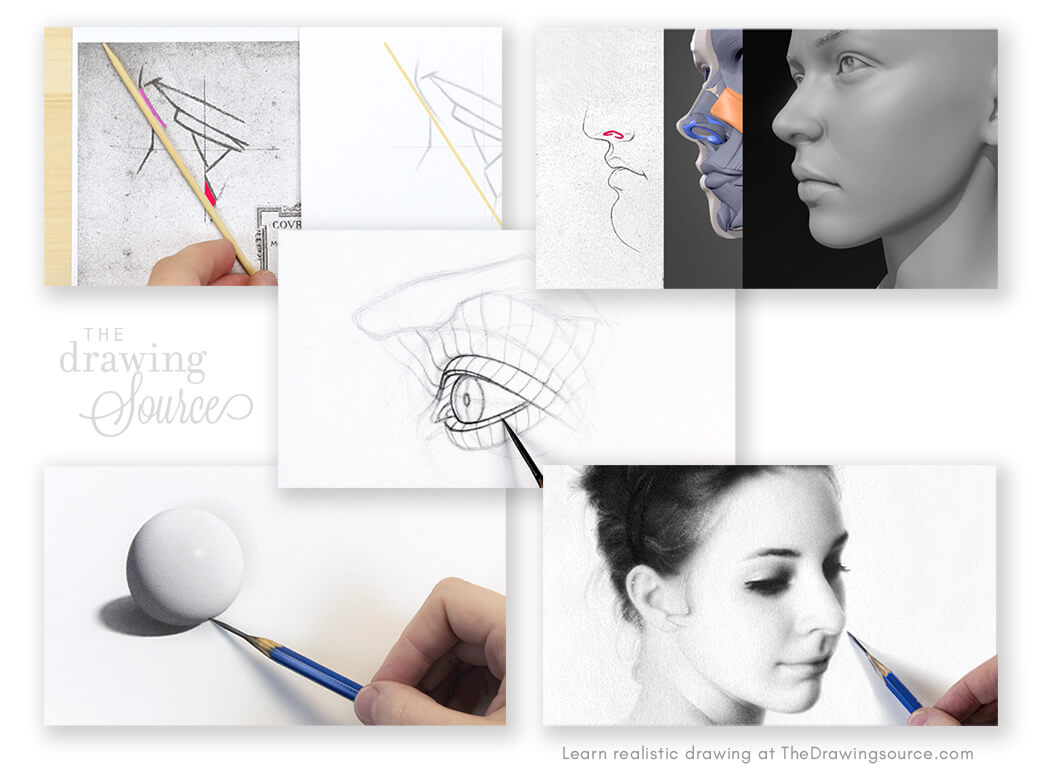
The Drawing Source is an online school for realistic drawing, designed to guide you from foundational skills to advanced subjects like the portrait and figure.
On this page, I’ll demystify:
- How realistic drawing is actually learned (there's a map)
- What skills matter most, and
- Where and how to start
Table of Contents:
>> 3 Misconceptions About Realistic Drawing>> Your Map for Learning Realistic Drawing
>> The Levels of Drawing Skills
>> Why Figure and Portrait Drawing Feels So Challenging
>> Oops, I Skipped My Foundations
>> Two Approaches to Learn Realistic Drawing
>> Choose Your Learning Path
>> Start Building Your Foundations
If any of this sounds familiar ...
You’ve followed tutorials but still feel stuck – like you’re missing key steps or skills.
Or, you've tried figure or portrait drawing and felt discouraged.
You're tired of guessing what to practice next and want clear structure and progression.
Bottom line: you just want realistic drawing skills that let you draw anything.
... you’re in the right place.
I’m Marina — a professional visual artist, former tenure-track professor of art, and founder of The Drawing Source. I’ve been studying, practicing, and teaching drawing for almost 20 years, and I’m excited to share the methods and curriculum I've developed along the way. Let's get started!
Before I show you how to learn realistic drawing,
let’s clear up a few common misconceptions:
3 Common Misconceptions About Realistic Drawing
1)
Drawing isn’t magic, and it's not limited to people who are “born
talented.”
Drawing is a learnable skill, much like reading and writing.
Most people can learn to read and write at a 'functional' level. Not everyone becomes a masterful novelist – but with good education, practice, and expert feedback, almost anyone can improve dramatically.
Drawing is the same. It’s a skill set – and it can be learned.
2) You don’t learn to draw separate things - you learn skills that apply to everything.
To learn realistic drawing, you don’t memorize how to draw an eye… then a nose… then a hand.
Instead, you’ll develop a set of foundational skills that apply
to every subject. That’s how you become someone who can draw anything – not just follow tutorials.
3) You are not “too late”.
Maybe you’ve always wanted to draw, but life took you elsewhere. Whether you built another career, stepped away from art for decades, or are just now becoming interested in drawing – it is not too late.
Many of my students are in their 50s, 60s, and 70s. Some are returning to drawing after a long break. Others are starting for the first time. Both groups are building strong skills and creating meaningful work.
Drawing is a skill that can be developed at any
stage of life.
So - how do you actually learn realistic drawing?
Here's the map.
Your
Map for Learning Realistic Drawing
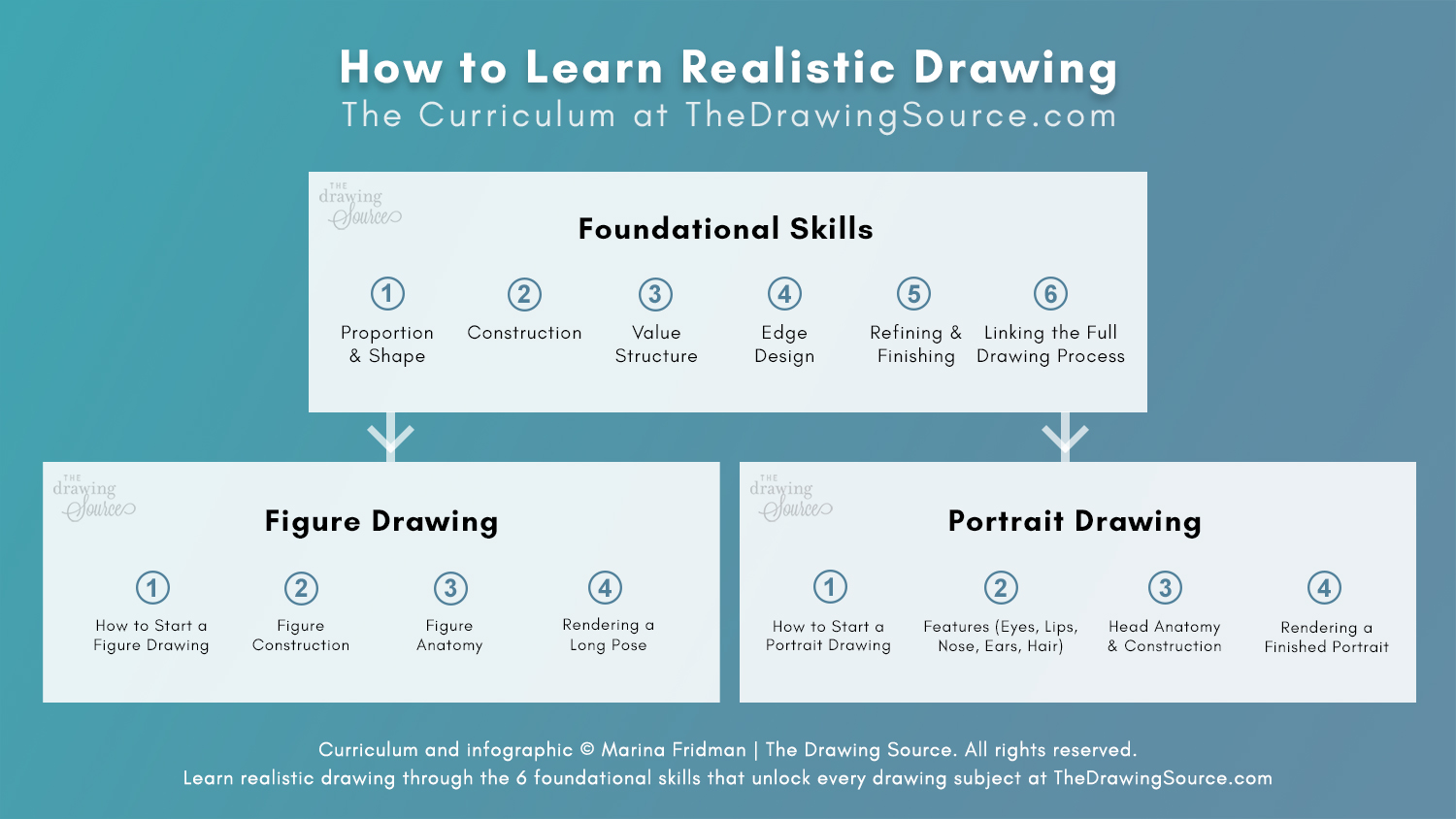
Realistic
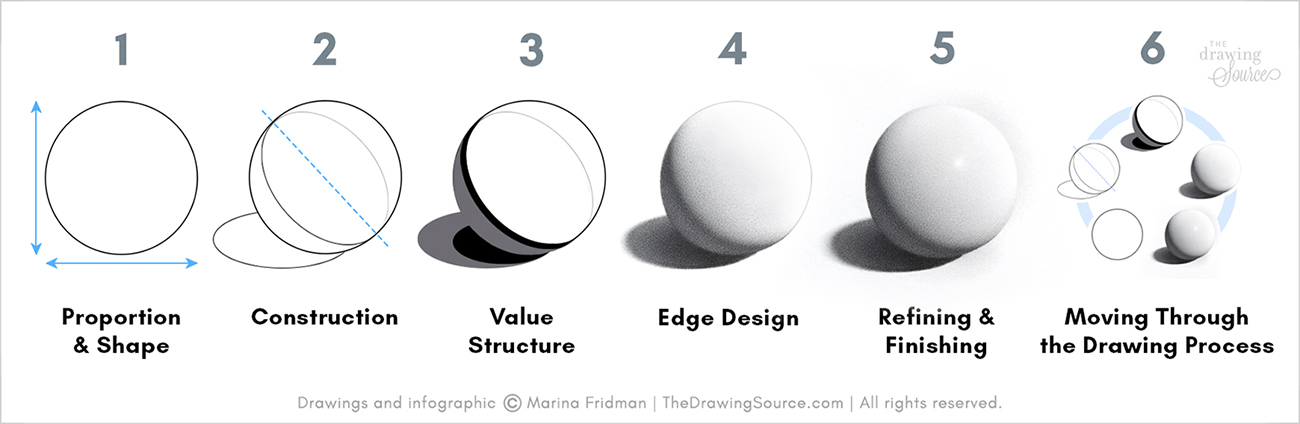
drawing relies on six foundational skill categories:
- Proportion & Shape
- Construction
- Value Structure
- Edge Design
- Refining & Finishing
- Moving Through the Drawing Process
A Key Idea:
No matter what you want to draw – whether it’s the figure, portrait, or anything else – the starting point is the same:
You start by learning the 6 foundational skills that unlock every subject.
It’s often assumed that to draw portraits, figures, or any advanced subject – we need new or different skills.
But - this is not how drawing works.
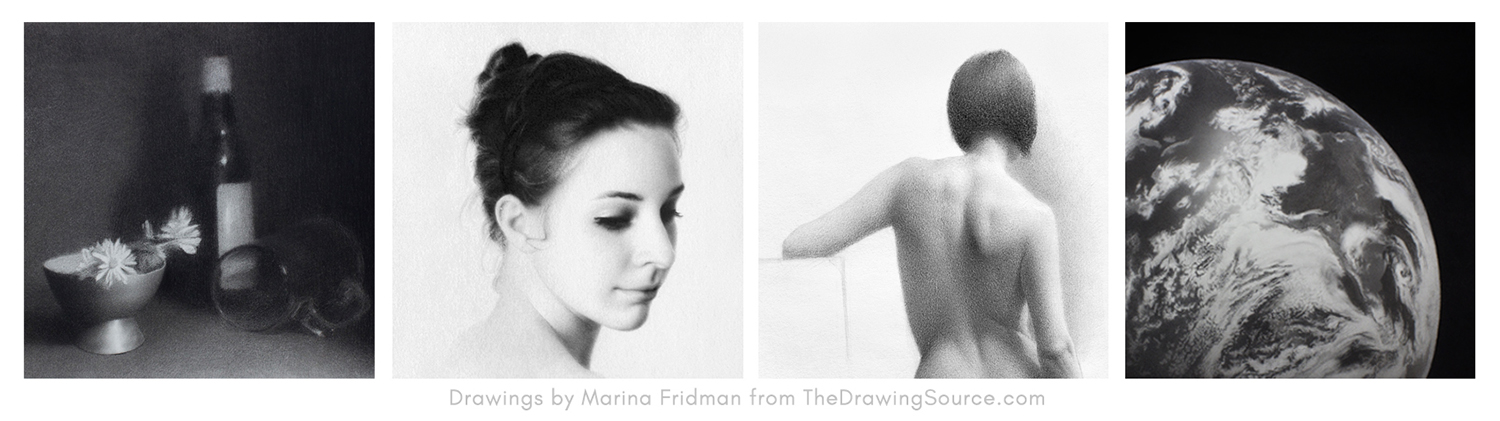
To draw portraits and figures successfully, we don’t need different skills.
We need to use the same foundational skills at a higher level
– with greater
control, accuracy and consistency.
This misconception is often what keeps students stuck – moving from tutorial to tutorial, searching for something new, when what's usually needed is to strengthen the foundations they may have missed.
(If you're already suspecting that you've missed some foundational skills – that's okay! It's completely fixable.)
The Levels of Drawing Skill
Every drawing skill is developed in levels. We can have a beginner, intermediate, or advanced level of each foundational skill.
For example, consider angle-sighting – a technique for
measuring and drawing accurate angles in any subject (from the Proportion & Shape skill category).

We can use angle-sighting:
- At a beginner level: we're learning the technique and getting inconsistent results
- At an intermediate level: we're achieving more accurate results more often
- At an advanced level: we're using the skill confidently, comfortably, and reliably achieving
accurate results
To draw portraits and figures successfully, our foundational skills must be at an intermediate-to-advanced level.
Why Figure and Portrait Drawing Feel So Challenging
This is why figure and portrait drawing can feel so challenging. Not because they’re mystical, but because they require:
1) Strong foundational skills (intermediate-to-advanced level)
2) Plus, subject-specific knowledge (like figure construction or portrait anatomy)
Looking at the map above, can you see why it's easy to be discouraged and overwhelmed when you start complex subjects too early?
It's not because you “can’t draw.”
Usually it's because you've skipped essential steps and haven’t yet built the core skills you need to be successful.
It’s a little bit like trying to build the roof before the foundation is stable.
Or stepping into the gym for the first time and immediately trying to dead-lift 300 lbs.
Oops, I Skipped My Foundations
If this rings true and you feel like you may have skipped some
foundational skills – this is very common, and completely fixable.
The solution: identify the core skill(s) that need work, and strengthen them using focused exercises.
Here's what happens when you do:
"It is incredible how much I have progressed. After oil painting for six years I realize that this is where I should have started! Thank you for your wonderful and insightful lessons.” –Stanley C.
"I found Marina after unsuccessfully trying to learn from a variety of other places, and it really clicked for me. That's when I started making actual improvements." –Wendy L.
–Students in the Atelier at The Drawing Source
A membership for building the 6 foundational skills that unlock every drawing subject.
Two Approaches to Learn Realistic Drawing
There are two approaches to learning realistic drawing.
Option 1: Try to learn how to draw six different subjects by collecting tutorials.
Option 2: Build the six core skills that allow you to draw anything.
One approach jumps from subject to subject, and usually skips essential foundations.
The other builds the skills that support every subject you could ever want to draw.
Option 2 is what The Drawing Source is built around — and it works like this:
1) Develop your core skills - the 6 foundational skills that unlock every drawing subject.
2) Learn to apply them to increasingly complex subjects – like the figure and
portrait.
Realistic drawing isn't
mysterious.
It's a set of skills, built in the right order.
Start with
the foundations, and every subject becomes approachable.
Choose Your Learning
Path
There are three learning paths at The Drawing Source:
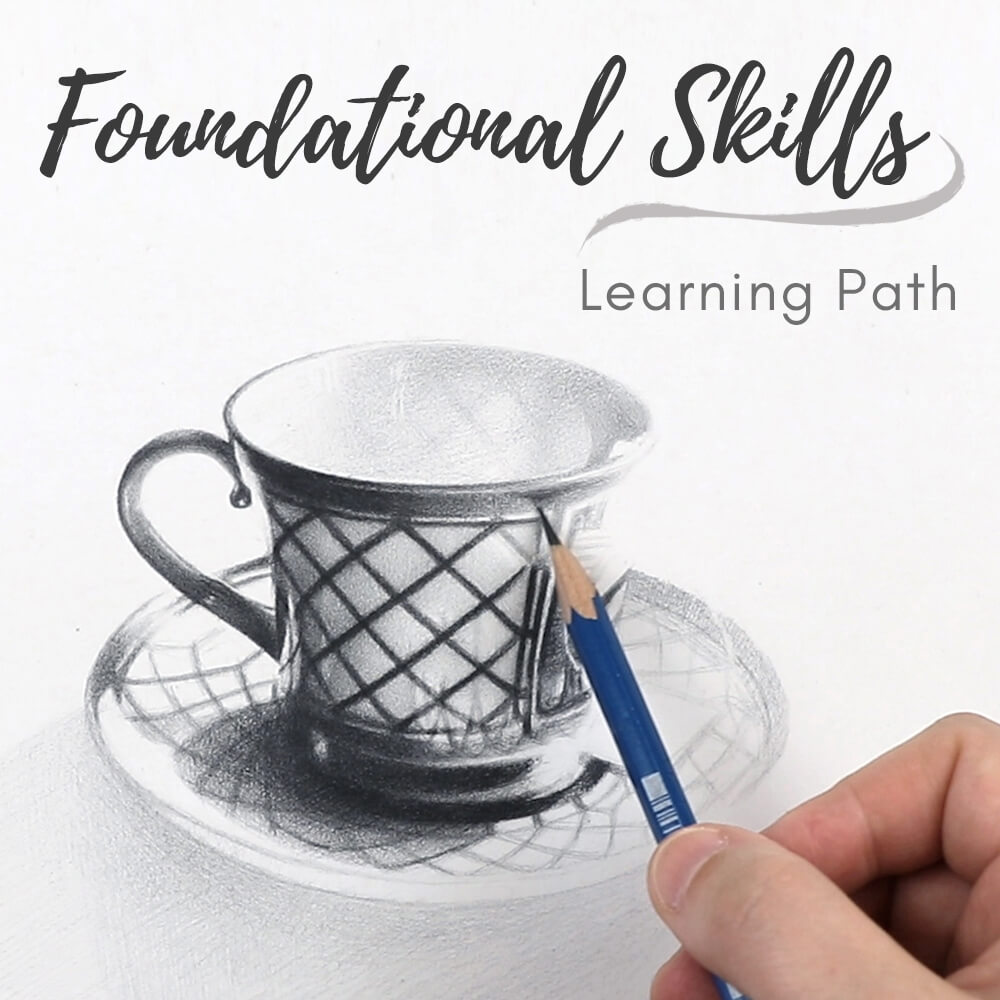
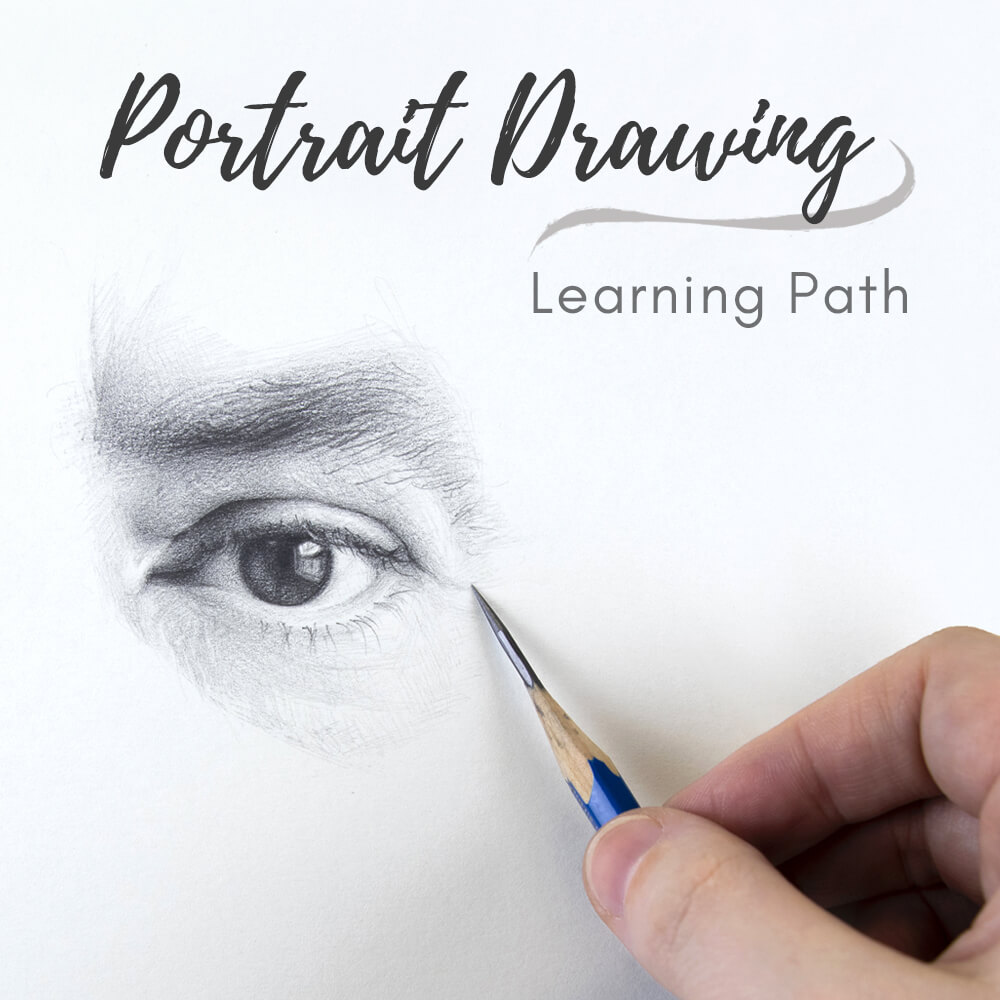
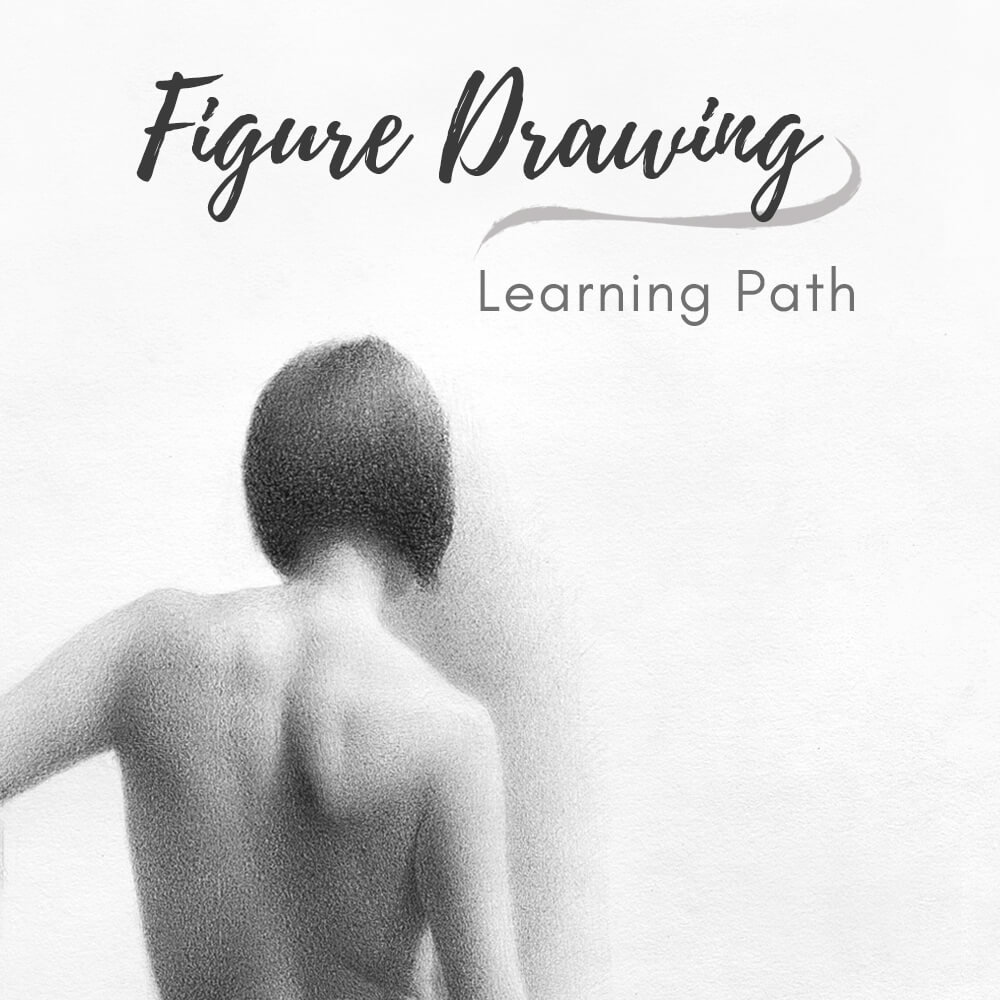
No matter which path you ultimately want to pursue, they all start in the same place: strong foundations.
Start with the Foundations Learning Path if: You're new to realistic drawing, or you're intermediate but want to fill in some gaps in your foundational skills.
Start with the Figure or Portrait Drawing Learning Path if: You have drawing experience, confidence in your foundational skills, and feel ready to take on more complex subjects.
Ready to build your foundational skills?
The Atelier is a structured curriculum designed to teach you the 6 foundational skills that unlock every drawing subject. In this membership you'll develop your skills while working with simplified versions of the portrait and figure, so your practice is direct preparation for the subjects you ultimately want to draw.


By Marina Fridman — a professional visual artist, former tenure-track professor of art, and founder of The Drawing Source, where over 1,000 students have taken drawing courses.
Search the site above
Welcome to The Drawing Source!
Here you can learn realistic drawing through six foundational skills that unlock every subject.
Start here if you're new.
Then, explore these learning paths:

Hi, I'm Marina — a professional artist and former professor of art. I started this school to simplify realistic drawing into steps that are easy to understand and apply. Let's grow your skills and your enjoyment of the drawing process.
Realistic Drawing Curriculum
Develop your foundational skills and apply them to figure and portrait drawing in the Atelier membership.
$29/month USD or
$199/year (5 months free)
