How to Draw Realistically
The
6 Essential Skills You Must Develop
To learn how to draw realistically, start with the six foundational skills that unlock every drawing subject. Whether your goal is portrait drawing, figure drawing, still life, or complex textures — the same core skills are required, and the starting point is the same.
Welcome to the Foundational Skills Learning Path at The Drawing Source!
On this page, you'll find a clear map of what these skills are, why they
matter, how they form the structure of the drawing process, and how to
start developing each one.
Table of Contents:
>> What are foundational skills in realistic drawing?>> Why advanced drawing subjects feel difficult
>> The six foundational skills needed for realistic drawing
>> Diagnosing your drawings: it's one of 6 issues
>> How foundational skills form the drawing process
>> Start learning how to draw realistically
>> Proportion and shape
>> Construction
>> Value structure
>> Edge design
>> Refining and Finishing
>> Moving through the drawing process
>> How to build strong foundational skills
What
Are Foundational Skills in Realistic Drawing?
Foundational
skills are not “beginner skills.” (This is a common misconception!)
They're the core abilities required to draw anything — a still life, a portrait, the human figure, complex textures, or any subject you’re drawn to.
We can have beginner, intermediate, or advanced levels of these foundational skills.
Let’s take angle-sighting as an example - a measuring technique for drawing accurate angles in any subject.
We can use angle-sighting:
- At a beginner level: We're learning the technique, it feels unfamiliar, and our results are inconsistent.
- At an intermediate level: It feels more natural, and our accuracy improves.
- At an advanced level: We use the skill confidently and comfortably, achieving reliable, precise results.
It’s the same skill – used with greater control, accuracy, and consistency.
Why Advanced Subjects Feel So Difficult
If advanced drawing subjects feel difficult, it's not
because they require new techniques, but because they demand stronger
foundations, at an intermediate-to-advanced level.
Think of it this way:
Does a tennis player ever stop working on their forehand?
Beginners learn the forehand early on.
Intermediate players refine it.
Professional players continue strengthening, adjusting, and perfecting it
throughout their entire careers. Because:
The difference between levels isn’t a new technique.
It’s greater control, precision, and consistency.
Drawing works the same way.
We don’t “graduate”
from foundational skills.
We deepen them.
The stronger your
foundations, the more complex subjects you unlock.
This is what it means to learn how to draw realistically — not acquiring new techniques for each subject, but building and deepening the same foundational skills.
So, what are these essential Foundational Skills in realistic
drawing?
The
Six Foundational Skills Needed for Realistic Drawing
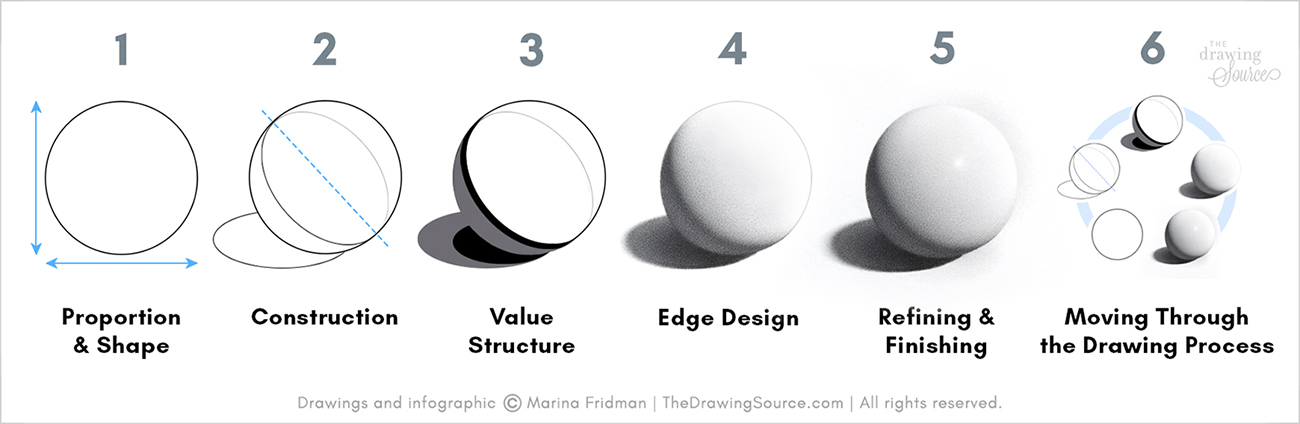
Realistic drawing relies on six core skill categories:
- Proportion & Shape: Seeing and measuring accurate relationships
- Construction: Building 3D volumes and forms before shading
- Value Structure: Organizing light and shadow clearly
- Edge Design: Creating transitions between values to create depth and dimension
- Refining & Finishing: Adding nuanced values and edges to enhance realism
- Moving Through the Drawing Process: Knowing what to do, in what order, and how to troubleshoot
Diagnosing Your Drawings: It's one of 6 issues
When one of these six skills is weak, your drawing will look "off." For example:
- No likeness? Proportion and shape issue.
- Line drawing looks flat and formless? Construction issue.
- Effect of light is not convincing? Value structure issue.
- No depth or dimension in your shaded drawing? Edge design issue.
- Lacks nuance or doesn't look convincingly realistic? Refining & finishing issue.
- Chaotic, messy drawing? (We've all been there!) Process issue.
The root cause of most drawing frustration is skipping one or more of these skills!
This is actually great news. Because it means when you have these skills, drawing isn’t mysterious – it’s diagnosable.
And,
once you can identify which category is weak, you can strengthen the
specific skill that needs work, using focused exercises.
Strengthening your foundational skills is what improves the realism of your drawings - and makes advanced subjects possible.
How Foundational Skills Form the Drawing Process
These foundational skill categories are not random.
Together, they form the structure of the drawing process itself:
1) Establish proportions and shapes
2) Build structure and construction
3) Organize value relationships
4) Design edges
5) Refine and finish
6) Move through the process with intention and clarity
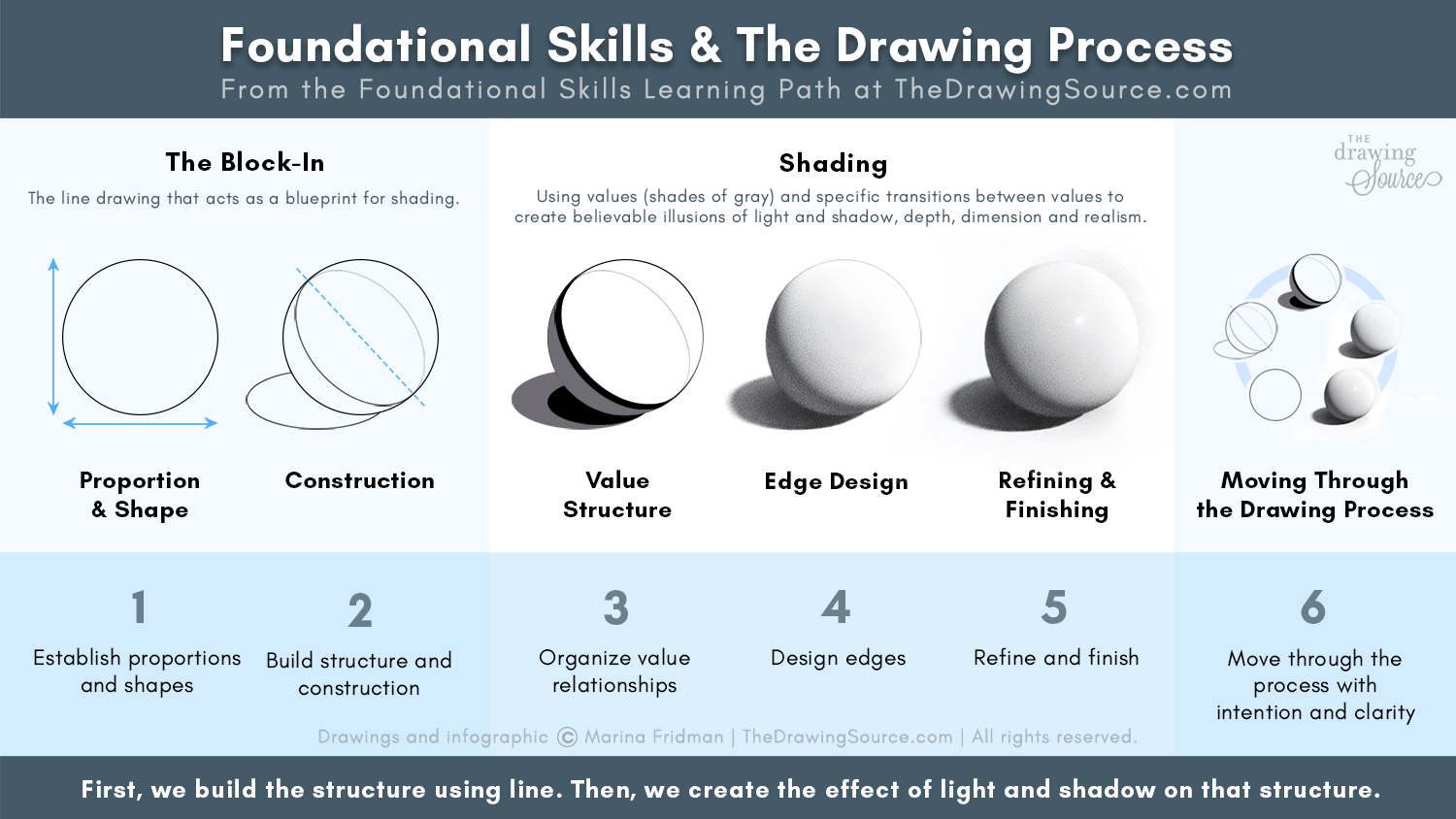
These stages naturally fall into two parts: the block-in
and shading.
1) The Block-In: the line drawing that acts as a blueprint for shading.
2) Shading: using values – shades of gray – and specific transitions between
values to create believable illusions of light and shadow, depth, dimension and
realism.
First, we build the structure using line. Then, we create the effect of light and shadow on that structure.
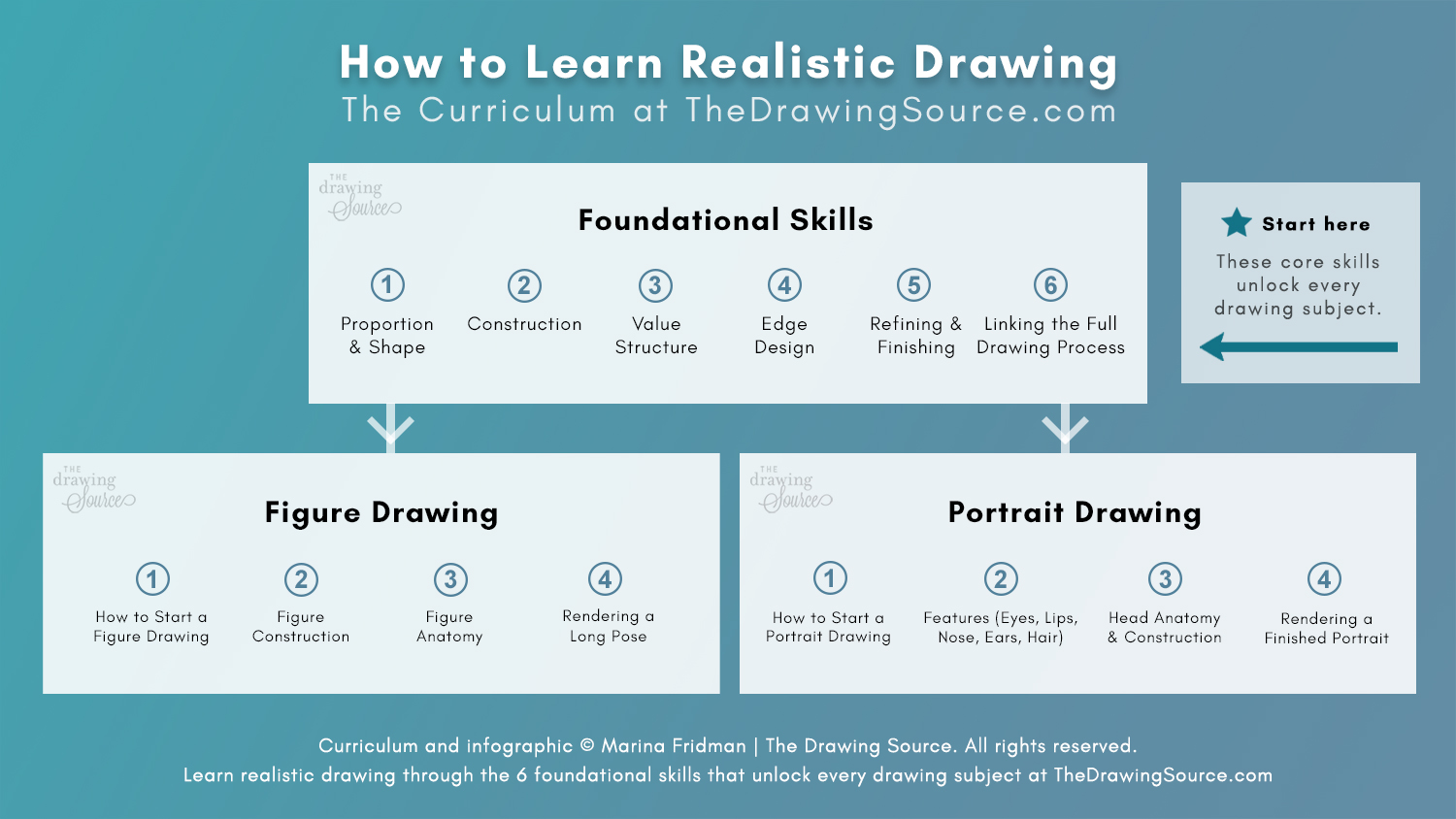
In the Atelier at The Drawing Source, you can develop your skills in each category individually, starting with Proportion and Shape. Then you'll learn how to weave them together into a smooth, repeatable drawing process.
Together,
these skills transform drawing from a mystical and overwhelming
activity into a clear system that you can understand and repeat.
Start Learning How to Draw Realistically
To learn how to draw realistically, start by developing and strengthening the six foundational skills, one category at a time. Below, you'll find an overview of each category, along with recommended starting points and ways to deepen your training.
Foundational Skill 1) Proportion and Shape
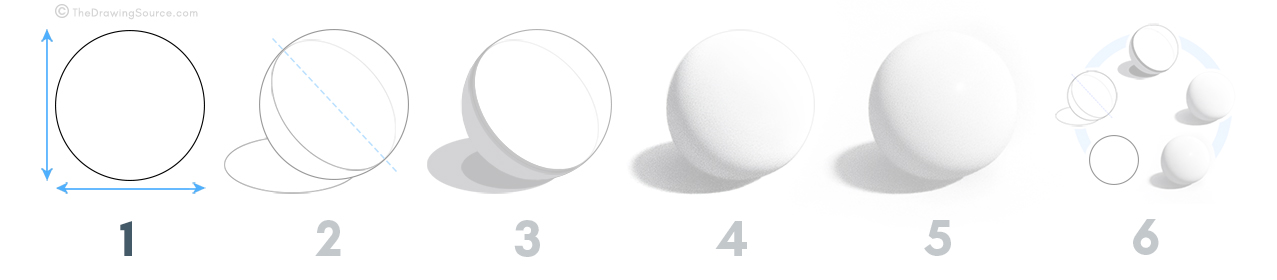
The skills in this category allow you to see, measure and
draw accurate proportional relationships (such as height-to-width ratios, angles and
alignments), as well as specific complex shapes.
In the drawing process, we start by establishing overall proportions: the largest heights,
widths, angles and shapes.
We work from general to specific - or from large to small. For example, we can start with a general shape that envelops the entire form, and then subdivide it into smaller, more specific shapes and proportions, until it resembles the subject.
Why it’s important:
Accurate shapes are what create likeness, or resemblance, in a drawing. They’re what make our drawing actually look like our subject.
If we don’t know how to draw accurate shapes and proportions, our portraits will never look like the person we’re drawing.
Some
drawing subjects, like still lives, are more forgiving in this area. But the
portrait and figure – the most popular subjects – are not. No amount of beautiful shading will correct inaccurate
proportions.
Develop this skill in the Atelier:
In the Atelier, Phase 1 of the curriculum is dedicated to this stage. You'll learn 10 measuring techniques to draw accurate proportions, develop the pencil control and dexterity to execute them, and build the block-in strategies that form the foundation of every realistic drawing.
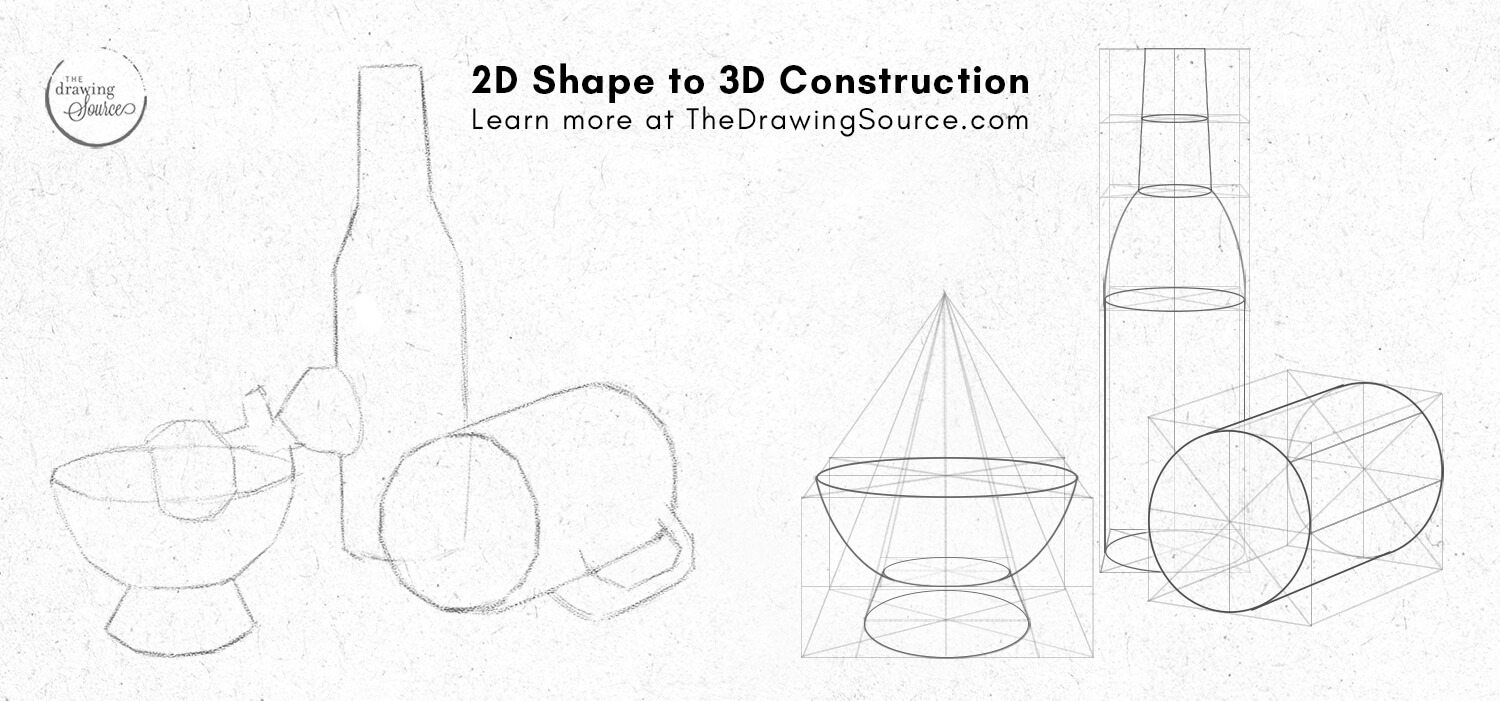
Foundational Skill 2) Construction
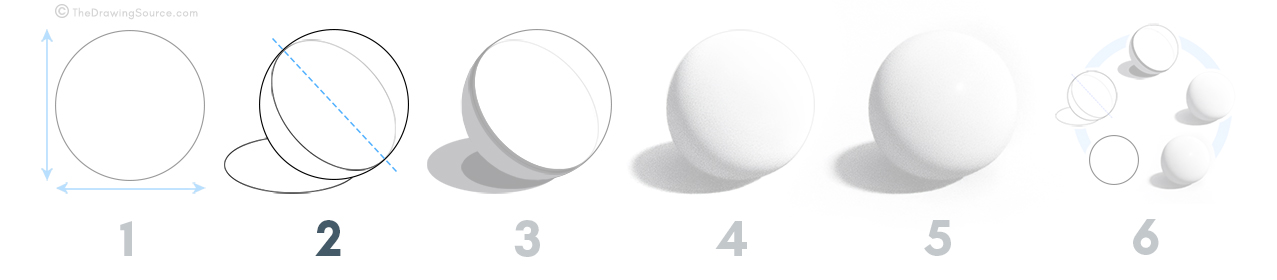
The skills in this category allow you to build volumes and
forms – such as spheres, boxes, cylinders, and combinations of these – that
give your drawings solidity, weight and three-dimensional presence before shading
begins.
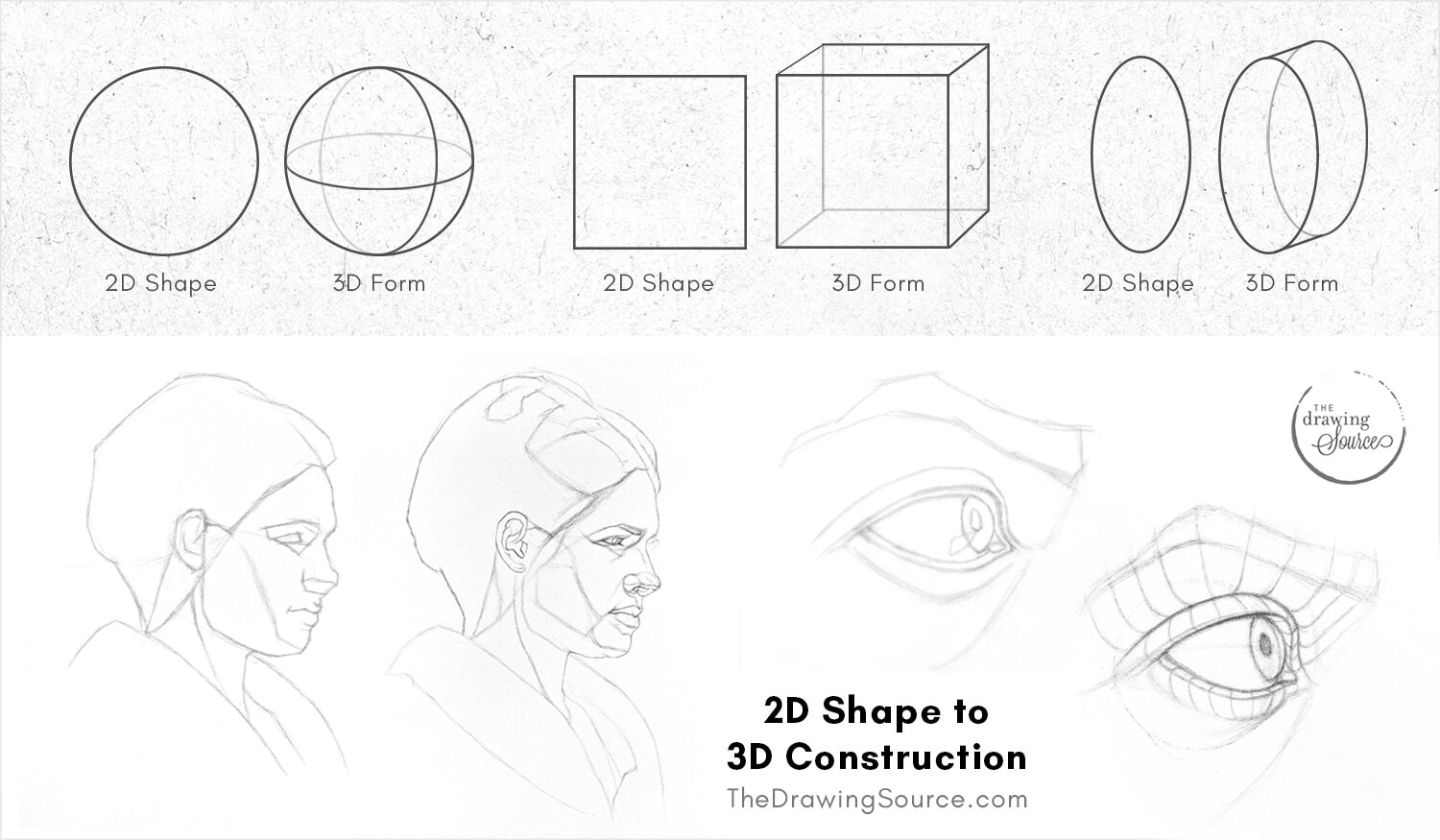
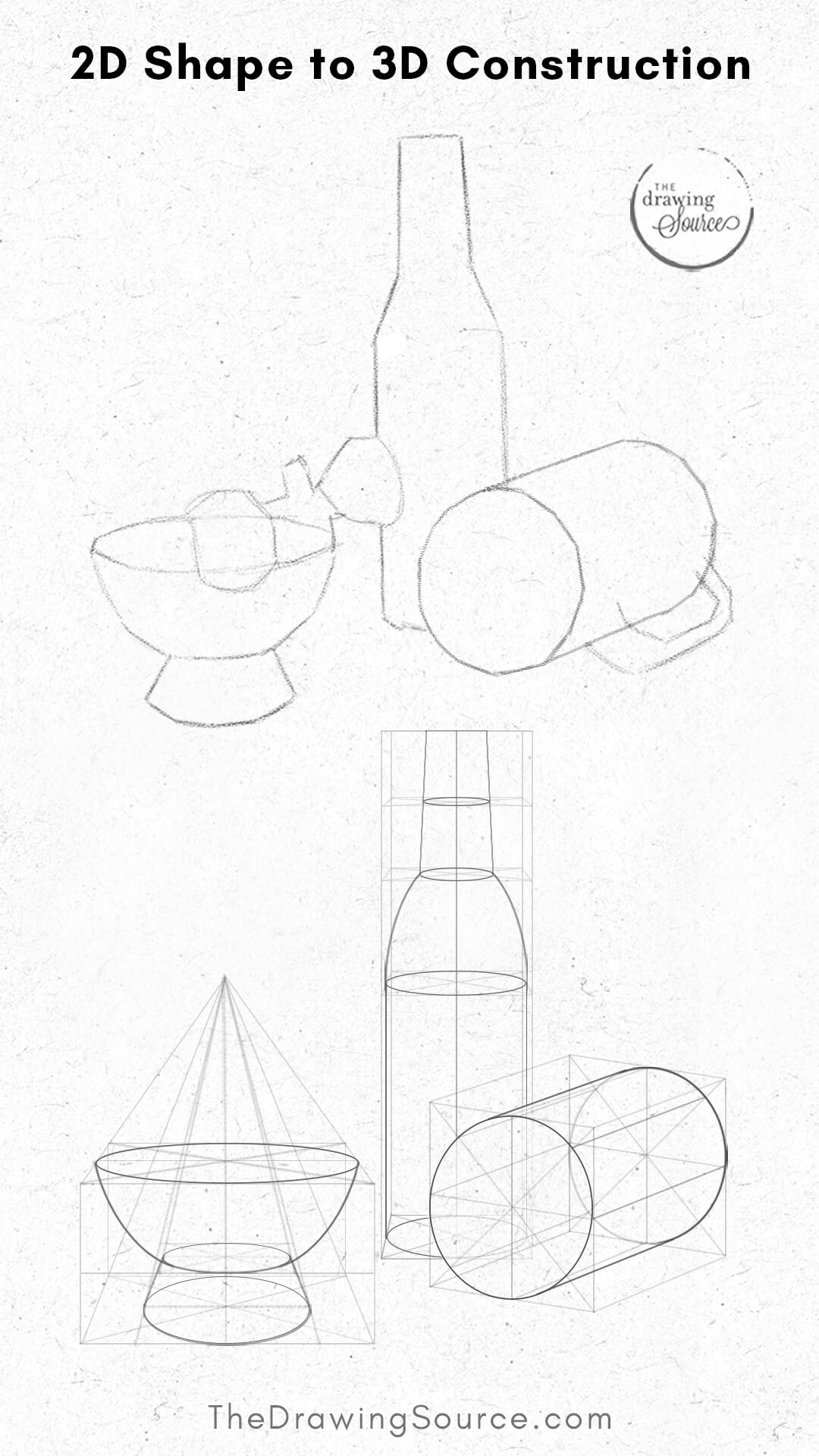
At its core, construction is turning a 2D shape into a 3D form. Once we can measure and draw accurate 2D relationships, we
can construct 3D structures within those shapes. Here we move beyond outlining
the subject and start building it as a three-dimensional form - still using
line.
Through perspective and construction methods - drawing interior information and relating it to the contour – we create a believable sense of volume and solidity.
For more advanced subjects like the figure and portrait, we
learn how to visualize and build complex forms out of simpler ones like spheres,
cylinders and cubes.
Why it’s important:
Without construction, a drawing will look flat. It may have accurate proportions, but because it’s lacking internal structure, it will lack that convincing sense of depth, weight and three-dimensional presence.
Construction allows a drawn form to feel solid – like it
occupies real space. It’s a step that’s often skipped, and it marks one of the
clearest differences between beginner and intermediate drawings.
Develop this skill in the Atelier:
For many students, this is one of the more challenging stages to learn. In the
Atelier, you'll be introduced to a few key construction concepts in Phase 1 —
then move into shading to build confidence and see results — before returning
to construction with greater understanding and motivation later in the
curriculum.
*Construction is introduced in Phase 1 of the Atelier,
with dedicated construction courses currently in development and being
added to the curriculum.
Foundational Skill 3) Value Structure
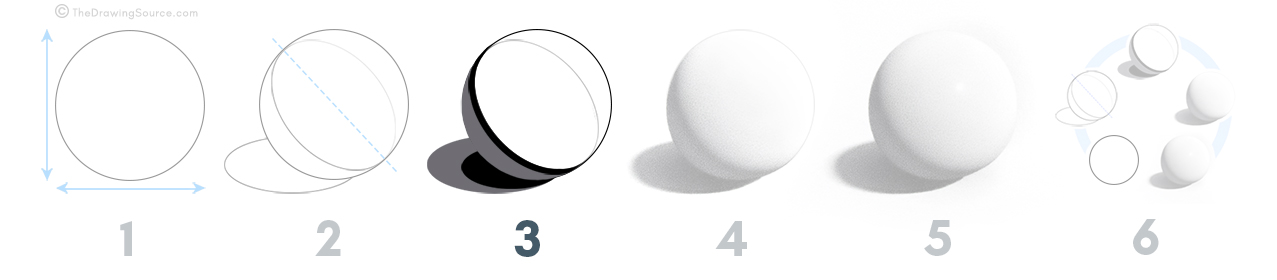
The skills in this category allow you to add values — shades of gray —
to your drawing in a clear, organized way that convincingly represents
light and form.
Once the block-in is complete, we can start shading by adding values - shades of gray - to our drawing.
In this first shading stage, our goal is not detail or refinement — it's the organization of values.
Remember how in drawing we work from general to specific? This principle applies to shading too. We establish the larger, more general value relationships first, before adding smaller, more nuanced ones.
To do that, we simplify what we see into three general value groups — light, halftone, and dark — based on where those values appear on the subject. The relationships between these groups need to accurately reflect what we see on the subject.
This simplification of values is called establishing a value structure, and it lays the groundwork for realism — because realism depends more on clear value relationships than on detail.
Why it's important:
Value creates the effect of light in a drawing. Without a clear value structure, shading will look confusing or arbitrary, and the drawing won't convincingly represent light or form — no matter how much time you spend refining it.
Detail only strengthens realism when it's built on top of a clear, organized value structure.
Develop this skill in the Atelier:
In the Atelier, Phase 2 of the curriculum introduces value structure. Here you'll learn to shade smooth, even tones and beautiful gradations, simplify and organize values, and create believable depth and dimension in your drawings.
Foundational Skill 4) Edge Design
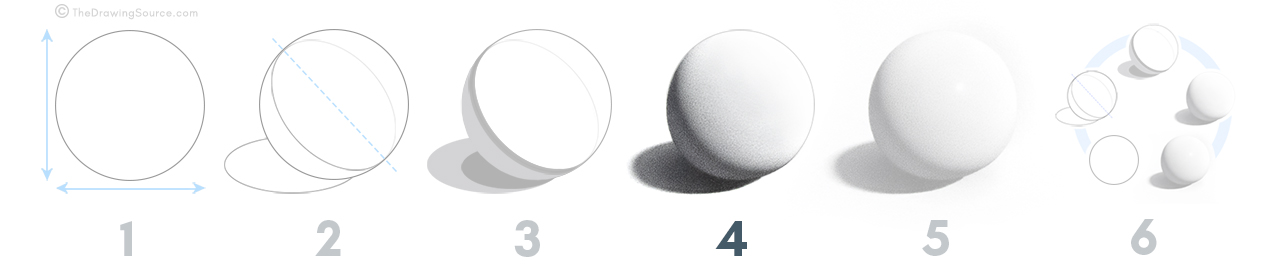
The skills in this category allow you to control the transitions between
values — creating the illusion of depth, dimension, and form in your
shaded drawings.
Once the value structure is established, we begin 'turning the form' — creating depth and dimension by modifying the edges, or transitions between values.
Edges describe how one value changes into another:
- To show a slowly turning form, we use a soft edge — a gradual gradation.
- To show a sharper plane change, an angle, or an abrupt end of a form, we use a sharp (or hard) edge — one value placed directly next to another, with a clear boundary between them.
- Most edges fall somewhere between these two extremes.
By using a range of edge qualities, we can describe everything from softly rounded forms to crisp plane changes — creating drawings that feel solid, dimensional, and convincingly real.
Why it's important:
Edges create the illusion of depth, dimension, and form within the values you've already established. Without intentional edge control, a drawing can look flat, blurry, or overly outlined — even if the values themselves are accurate.
Learning to see and control edges is one of the clearest differences between beginner work and more advanced, realistic drawings.
Develop this skill in the Atelier:
In the Atelier, you'll learn to create a full range of edge qualities in Smooth Shading in Graphite (Phase 2 of the curriculum). Then you'll put them into practice as part of a complete, structured drawing process in The Drawing Process: from Start to Finish.
Foundational Skill 5) Refining and Finishing
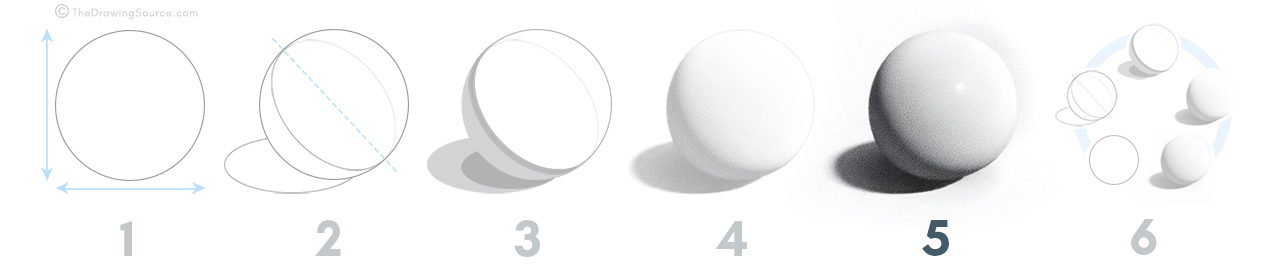
The skills in this category allow you to selectively refine values and
edges — adding nuance and detail where it matters most, while knowing
when to simplify and when to stop.
Here we slow down and finally dig into the details. We
patiently adjust nuanced values and edges to make our illusions of light, form,
and depth even more convincing. This is where subtlety matters — small changes
can make a big difference.
Rather than adding detail everywhere, we make selective refinements – learning where to add detail and where to simplify.
Why it's important:
Many drawings remain unfinished or become overworked at this
stage — not necessarily because the artist lacks skill, but because they don’t
know what to refine, why, or when to stop.
Develop this skill in the Atelier:
In the Atelier, you'll develop the technical skills of refining and finishing in Smooth Shading in Graphite — learning to create nuanced values and edges with precision and control. Then, in The Drawing Process: from Start to Finish, you'll learn how and when to apply them as part of a complete drawing process.
Foundational Skill 6) Moving Through the Drawing Process
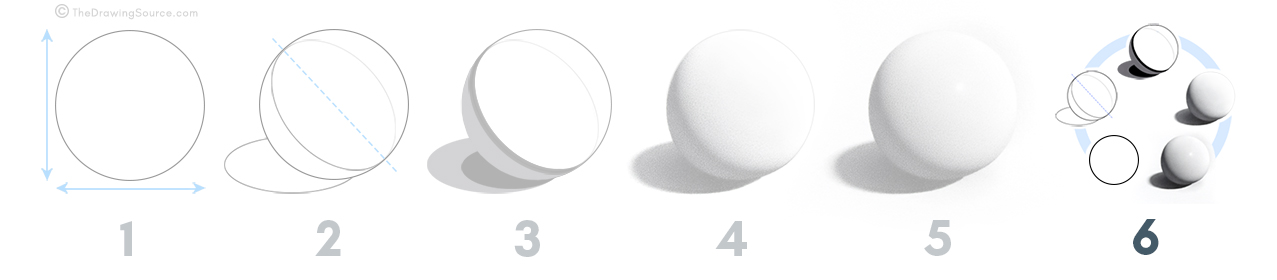
The skills in this category allow you to move through a drawing with
intention and clarity — knowing what to do, in what order, and how to
troubleshoot when something isn't working.
The final
foundational skill is weaving the steps above into a smooth, intentional
drawing process.
Without a structured sequence, it’s easy to:
- Skip essential steps
- Jump into detail too early
- Overwork one area while neglecting others
- Get lost halfway through
- Or feel unsure what to do next
A clear, intentional process transforms drawing from something that feels overwhelming and unpredictable into something steady and repeatable – a process that you can trust.
Learn More:
Step by Step Drawing Tutorials - See the drawing process demonstrated across portrait, figure, and still life subjects
Develop this skill in the Atelier:
In the Atelier, The Drawing Process: from Start to Finish is dedicated entirely to this skill. You'll practice moving through each stage of the drawing process from block-in to refinement, learning to weave your foundational skills into a smooth, repeatable process that you can apply to any subject you draw.
How to Draw Realistically:
Build Strong Foundational Skills
Realistic drawing isn't mysterious — it's a set of skills, built in the right order.
Develop all six foundational skills in the Atelier — a structured membership where you'll work with simplified versions of the portrait and figure, building control and confidence before moving into full complexity.
Start with the foundations, and every subject becomes approachable.


By Marina Fridman — a professional visual artist, former tenure-track professor of art, and founder of The Drawing Source, where over 1,000 students have taken drawing courses.
Return to the Homepage from How to Draw Realistically
Continue to the Figure Drawing Learning Path from How to Draw Realistically
Continue to the Portrait Drawing Learning Path from How to Draw Realistically
Search the site above