- Home
- Supplies & Techniques
Realistic Drawing Supplies and Techniques: A Guide
Discover the essential drawing supplies you need for realistic drawing — what pencils, paper and tools to use — and the realistic drawing techniques to make the most of them.
Have you ever watched someone draw, and been amazed by the finesse of every mark that they made on their paper? In a single pencil stroke their line would change from thick to
thin, and from dark to light, and every mark was made thoughtfully and
purposefully.
This ability to draw accurately, and with a polish that makes the
process look smooth and elegant, is what every draftsperson strives for. To achieve this, it's essential for us to become so
familiar and comfortable with our drawing materials that they feel like
an extension of our arm, instead of drawing tools that we use. (Seriously. It should feel strange when we aren't holding a pencil or drawing tool!)
Learning about your drawing supplies and how to prepare them will make the drawing process much easier and more enjoyable.
In the articles below, I'll introduce you mainly to the drawing supplies that I use personally, in the tutorials on this website and in my programs, and that I generally recommend for successful drawing.
Despite the enormous selection of drawing supplies available to you, you really don't need many!
Really, all you need to draw is a
pencil and paper (though an eraser couldn't hurt, too). Let's add a few things to that list, but keep it simple.
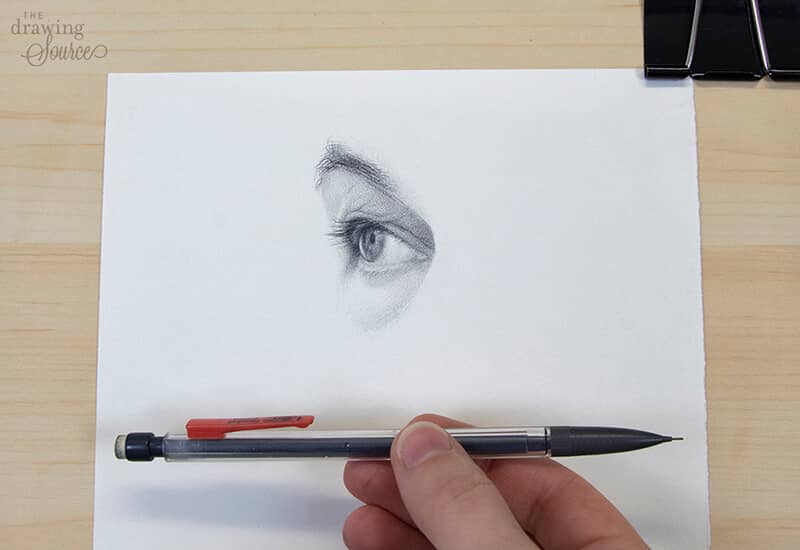 Proof that we don't need complicated drawing supplies - I drew this eye with a single mechanical pencil from a dollar store, and a kneaded eraser.
Table of Contents:
>> Supplies for Realistic Drawing>> Realistic Drawing Techniques to Start With
>> Toned Paper Drawing Techniques
>> Build Your Foundational Drawing Skills
Drawing Supplies for Realistic Drawing
What drawing pencils and paper should you use for realistic drawing?
The right pencils depend on your skill level, the value range and effects you want to create, and personal preference. In the Atelier, students start with graphite pencils for their smoothness and control, before exploring charcoal for its richer dark values.
For smooth, realistic drawing we choose a drawing paper with a smooth texture to the touch — it's infinitely easier to draw smooth values and gradations on a smooth surface! We also make sure that the paper is at least medium-weight, so that we can draw in layers, and erase safely.
For specific drawing pencil and paper recommendations, refer to the in-depth pages below:
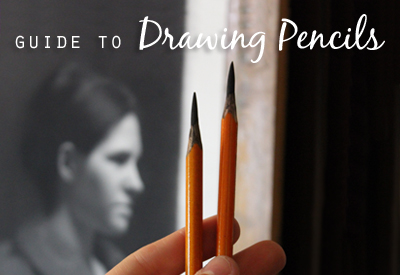
Learn What Drawing Pencils to Use for Realistic Drawing
Drawing pencils are a great place to begin your exploration of drawing materials. Explore the pencils I use throughout this website, and others that you may want to experiment with!
Learn how to choose the appropriate pencil for your drawing.
Learn What Drawing Paper to Choose for Realistic Drawing
Learn how to choose a drawing paper best suited to your drawing! Every drawing pencil interacts differently with every drawing paper.
Learn how to match up these drawing materials to get the effects that you want in your drawing.

3 Keys to an Effective Drawing Studio Setup
How you set up for drawing is just as important as your drawing supplies, and drawing skills! Certain habits — like drawing flat on a table — can create proportional problems in your drawings that are completely avoidable.
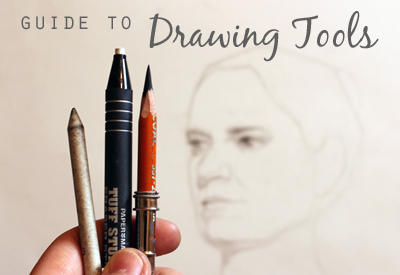
In this article you will find a list of drawing tools to make the drawing process more efficient and effective.
Some of these tools are essential, while others are optional and a matter of personal preference.
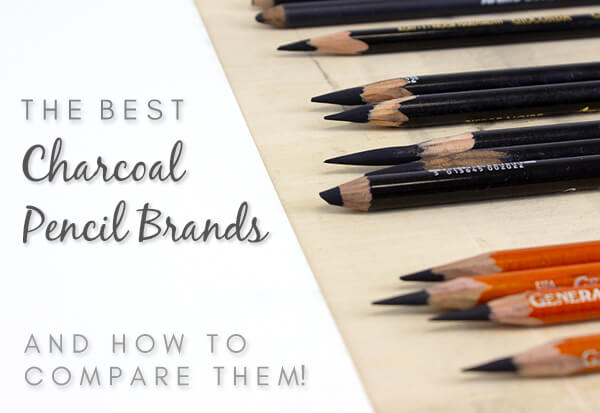
Recommended Charcoal Pencil Brands and How to Compare Them
In this article I recommend charcoal pencil brands, and describe my process for comparing them so that you can find your own favorite charcoal pencils!
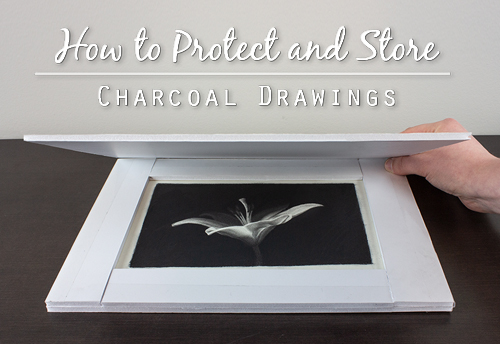
How to Protect and Store Charcoal Drawings
You've just finished your latest, sensational charcoal drawing.
Now what? How do you store your masterpiece safely? Find out in this article!
Realistic Drawing Techniques to Start With
Once you have your materials and have set up your drawing space (see this video on 3 Keys to a Successful Drawing Studio Setup — it matters more than you'd think!), there are a few core techniques to learn first.
The fundamentals are: how to hold and control your drawing pencil, how to prepare it for realistic drawing (that is, how to sharpen it), and how to use a kneaded eraser — which you'll reach for just as often as your pencil. Learn all of these in the three video lessons below:
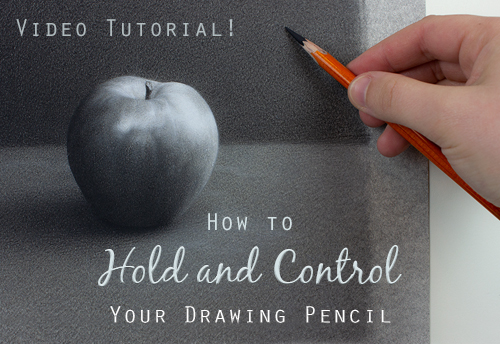
How to Hold and Control
a Drawing Pencil
Learn three essential strategies that give me the most stability, precision, and ability to manipulate my pencil while I’m drawing, in this video tutorial!
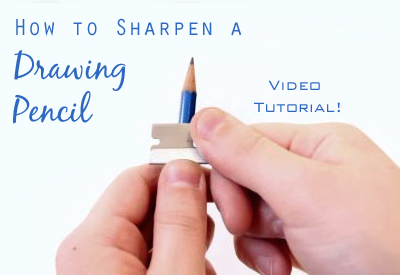
How to Sharpen a Drawing Pencil
In this detailed video tutorial, learn how to sharpen a drawing pencil the traditional way.
Create the most efficient and effective drawing tool to improve both your drawing process, and your final drawing!
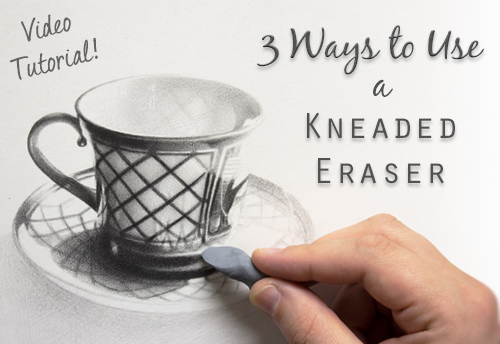
3 Ways to Use a Kneaded Eraser
In realistic drawing, your kneaded eraser
is just as important a drawing tool as your pencil. Discover 3 factors that
set it apart from a regular eraser, and 3 kneaded eraser techniques to
use in your next drawing!
The three videos above are from Foundations of Drawing Technique — the first course in the Atelier program, where you can build the foundational skills you need for realistic drawing.

Toned Paper Drawing Techniques
Drawing on toned or black paper is a powerful way to work — and a favorite of many realistic artists. Instead of building every value up from white paper, you start from a mid-tone or dark surface, adding the light values (with white pencils or chalk), the dark values, or both. It's an especially effective approach for dramatic lighting, glowing highlights, and subjects like glass, metal, and light itself.
The pages below cover how to make your own toned paper, how to work with white pencils, and how to apply these techniques to specific subjects:
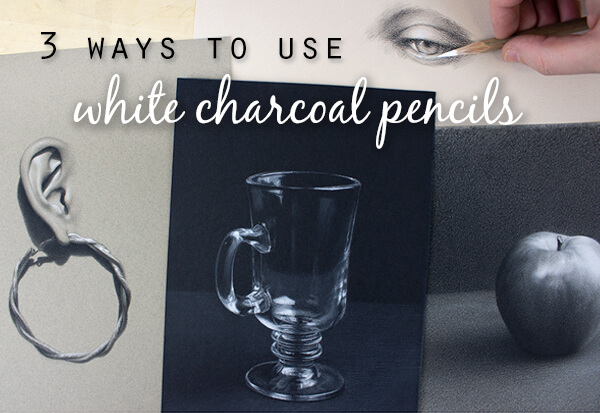
3 Ways to Use White Charcoal Pencils on Toned Paper
Whether you're looking to challenge your drawing skills or shake things up in the studio, using white charcoal pencils could be just the way to do it!
Here are three of my favorite white charcoal drawing techniques, ranked from least to most advanced.

Toned paper simply refers to paper that has a value other than white. Learn how to make it from scratch using various methods and materials!
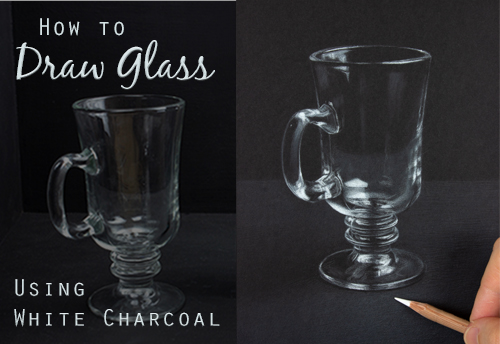
How to Draw Glass Using White Pencils on Black Paper
Learn to use a single white pencil to draw a realistic glass mug on black paper in this step by step drawing tutorial.
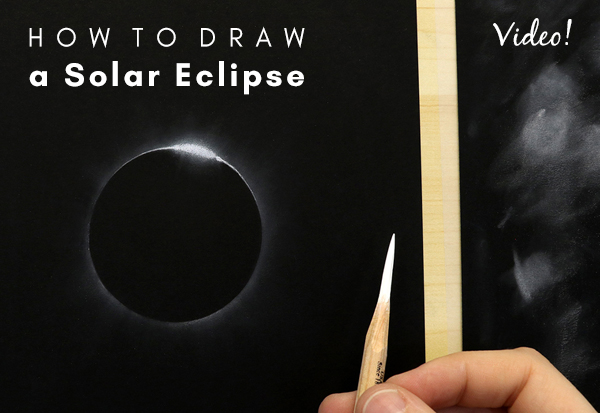
How to Draw a Solar Eclipse Using White Pencils on Black Paper
Learn how to draw an eclipse in pencil, using 4 easy steps, in this video tutorial.
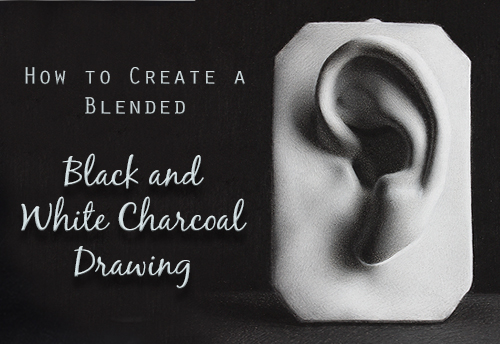
How to Blend Charcoal and White Pencils
Learn one of my favorite toned paper techniques - blending charcoal with a specific white pencil to create a beautiful, cooler-temperature charcoal drawing.
Build Your Foundational Drawing Skills
Knowing what to draw with is the first step. The next is building the foundational skills that unlock every drawing subject. You can do just that in the Atelier at The Drawing Source — a curriculum for building the knowledge, technical drawing skills, and modes of seeing needed for realistic drawing.

By Marina Fridman — a professional visual artist, former tenure-track professor of art, and founder of The Drawing Source, where over 1,000 students have taken drawing courses.
Search the site above
Welcome to The Drawing Source!
This is an online school teaching realistic drawing through six foundational skills that unlock every subject.
Start here if you're new.
Then, explore these learning paths:

Hi, I'm Marina — a professional artist and former professor of art. I started this school to simplify realistic drawing into steps that are easy to understand and apply. Let's grow your skills and your enjoyment of the drawing process.
Realistic Drawing Curriculum
Develop your foundational skills and apply them to figure and portrait drawing in the Atelier membership.
$29/month USD or
$199/year (5 months free)
